.jump-link{ display:none }

Friday, 31 August 2018

A Man of Many Parts - My Uncle Harry: Sepia Saturday

Lots of words can be used to describe my uncle  - a joiner, soldier, Dunkirk survivor, a skilled do-it-yourselfer, productive gardener, keen photographer, sailor  - and ballroom dancer. 

This week's prompt photograph from Sepia Saturday features a little lad, c. early 20th century, making a salute.  It    I immediately brought to mind the first photograph | have  of Harry.
 
Harry Rawcliffe  Danson (1912-2001) was the middle child of five, born to my grandparents William Danson and Alice English in Poulton-le-Fylde, Lancashire. His middle name came from his grandmother Maria Danson, nee Rawcliffe. The photograph above is the only one  I have of him as a child, and is part of a group photograph of the family, taken in 1916, as my grandfather set out to war.

Harry  followed his grandfather into becoming a joiner. and I remember him making a miniature table and chairs for my doll’s house.  Not surprisingly he was skilled in  do-it yourself.  

My next knowledge of Harry was from his army photographs.

Young man around town - look at that  hairstyle! 
The reverse of the photograph indicates it was taken in Salisbury -
when Harry was undergoing Army training? 


A formal Army photograph.


I think there is an Errol Flynn look about him here! 


This signed menu of December 25th 1939,   written in French and typed on very flimsy paper,  was found after his death amongst Uncle Harry's papers.    He was in France with the British Expeditionary Force, 9/17th Field Battery.  In the Sergeant's Mess,  breakfast was cold ham with piccalilli, eggs, coffee and roll and butter;  for dinner  - turkey with chestnuts, pork with apple sauce, potatoes, and cauliflower followed by Christmas pudding, apples, oranges, and nuts, with cognac, rum and beer - a wonderful feast in difficult conditions and testimony to the skill of the catering corps!

Five months later Harry was one of the many men evacuated from Dunkirk, saved by the flotilla of small ships.  Sadly many of the men who were at this meal may not have survived.   My mother used  to tell how Harry arrived back home from Dunkirk  still in the uniform in which he entered the sea to be rescued.   He never talked about his wartime experiences, but seeing commemoration services or documentaries on TV could bring tears to his eyes, so the memories remained very strong.


Harry  later served in North Africa.


Harry had a short lived marriage in the 1940's and never remarried.   He returned to his joinery trade after the war and  continued to live in the home of his childhood, renovating the house, and taking pride in his  garden,

I recall him taking his sister out for a Sunday run in his motor cycle and side car.    He then progressed to a car, extending  the driveway, and  turning the former hen house into a garage. He also had a small yacht which he sailed off the Fleetwood coast.

Living in Blackpool the natural home of ballroom dancing in the UK, Harry enjoyed a lot of time on the dance floor at  the Winter Gardens or on the Tower Ballroom  - and he was never short of partners!


 With a good friend, neighbour & dance partner, c.1970's. 


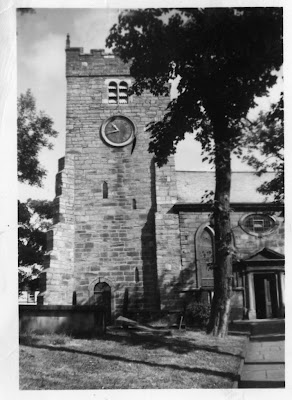
Harry was a keen photographer, at one time having his own dark room to develop pictures. He took this photograph of St. Chad's Church, Poulton-le-Fylde, noted for its carpet of crocuses in Spring.  Dansons back to 1736 were baptised, married and buried here. 

Harry lived  to the age of 89,  remaining active to the end of his life - and he retained his good looks!

 Harry Rawcliffe Danson (1912-2001)

Based on a blog profile first published in 2012

************** 


Sepia Saturday give bloggers an opportunity 
to share their family history through photographs.


Friday, 24 August 2018

School Days were Happy Days: 52 Ancestors - Week 35.

“Back to School” is Week 35’s theme in Amy Johnson Crow’s year long prompt “52 Ancestors in 52 Weeks."  With very little in the way of ancestors’ stories, I am featuring here my own school day memories.

I  come from a family of teachers (two uncles and an aunt), married a teacher and both my brother, daughter and myself have been trainers in our particularly fields.  So teaching is in the blood there somewhere.  My husband taught   physics, and quickly found that to admit to this fact  brought to an end any social conversation.  

  Here is my first school photograph from the 1950's. 


I attended primary school  in  Blackpool, Lancashire.  I am on the second front row, second from the right, next to the boy in the  striped pullover. The fashion and hair styles here  were so typical of the day - the girls with plaits, pudding basin haircuts, side slides or fancy top ribbons.

I counted a class of 46 - double today's standard for class size!   We sat in serried rows of  battered  individual wooden desks with inkwells,  and I remember chanting our times tables, copying handwriting,  the hated mental arithmetic sessions which I dreaded,  and of course reading which I loved.

Playing the triangle in my infant school percussion group  is one of my earliest school memo.ries.  I was not too pleased at being given  this instrument.  Like everyone else, I wanted the favourite choice  - the sleigh bells. 

Every Wednesday afternoon we gathered in the hall for community singing and I learnt such patriotic songs as The British Grenadiers, Hearts of Oak, The Bonnie Bonnie Banks of Loch Lomond, Bluebells of Scotland and my favourite Men of Harlech, sung with much gusto.  Sea shanties were also popular as we swung from side to side to sing What Shall We Do with the Drunken Sailor?   Are these now all forgotten,  as I doubt that children are familiar with them today? 

There was not a strict uniform at my primary school, but I was desperate to wear a gymslip and tie.   My mother did not like them, but eventually I got one handed down from my cousin and wore  the school red and navy striped tie and the red girdle round my waist, feeling I had stepped out of one of the school stories I loved to read. 

We didn't seem to get  individual or class photographs at my secondary school (girls only)  but I remember two occasions when the whole school (about 500  of us I think) gathered on the playing fields for a massive group photograph.  The first year pupils sat cross legged on the grass, with the staff in their academic gowns seated  on chairs, and the rest of the school grouped behind, either standing or  balanced on gym forms.  The result was a large rolled photograph in a scroll box.  Unfortunately I did not see fit to keep these and threw them out when I was having a major sort-out, prior to getting married.   I regret that now. 

My recollection of my teachers is they all seemed quite elderly (though this probably was not the case) and very few were married - most would fit the now old fashioned description of "spinsters". 

Miss Robinson (English) was a great mimic at adopting dialects and accents.  She brought to life the characters in such plays as "Midsummer's Night's Dream", "The Rivals" and "She Stoops to Conquer". 

I liked Miss Jones (Latin).  Unusually for me, one day I was brave enough to write on the blackboard the jingle "Latin is a language as dead as dead can be.  It killed off all the Romans and now it's killing me!"  Fortunately when she walked into the classroom she saw the humorous side of it.  

Another Welsh teacher was Miss Edwards who more than anyone made me want to study history - my first love.  It is amazing what facts I learnt many many years ago that come back to me when answering quiz questions on TV.

Miss Mutch (German) scared me.  She was from the Shetland Isles, bit of a bean pole, with cropped grey hair and given to wearing viyella checked blouses and v-necked pullovers.  She was burdened with the schoolgirl ditty of "If you miss Miss Mutch, you don't miss much".  I felt doomed from my first German lesson  when my attempt (in front of the class)  to pronounce a lovely German "Ich" came out as "Ick".   Still I persevered.  She was a good teacher, her lessons stuck with me, and I can still get-by in tourist German when abroad. 

From my first term at grammar school, science bored me stiff.    Our science teacher went by the unfortunate name of Miss Smedley, which was far to easy to change to Miss Smelly.  I could not work up any enthusiasm for learning about microscopic creatures such as the amoeba and hydra, nor get  fired up over a Bunsen burner. My  science knowledge is  poor, which is an awful admission to make in the modern world, though I have learned more from watching the quiz show Pointless on TV.  The irony is I went on to marry a physics teacher!  

We moved to Edinburgh where I finished secondary education at a co-ed school and for  the first time in my school life  I was  taught by men   Mr Scott-Allan continued  to develop  my interests in the past with a new dimension to it now of Scottish history, and Mr Ironsides (known as Tin Ribs) kept  Latin alive for me. 


So I have nothing but my memories to remind me of my High School days and University days where I was unaware of any group  photographs ever being taken.  I envy the American tradition of School Year Books - a great resource for family historians. 

I did toy with the idea of becoming a teacher myself, but my Aunt Edith (right)  was not encouraging.  She won  a scholarship to Fleetwood Grammar School , in Lancashire, riding the four miles on her bike in all weathers.  She became a teacher at Burn Naze School in Thornton Clevelys (a poor area of town in the 1920's and 30's)  and had a keen memory for past pupils (particularly black sheep)  and humorous incidents such as excuse notes, written  for absences.  Unfortunately her memorabilia from her teaching days must have been thrown out at some stage as I never came across it following her death - such a pity. 

But a few years ago I had a delightful find, when the school was celebrating its 100th anniversary and featured on its Facebook page fond pupil memories of Miss Danson as their infant teacher.

My student days ended on graduation, - followed four years later by my brother - and look at those 1970's sideburns!  Both our parents left school at 14 years old,  and we were the first generation to go to university - something our parents were very proud of.


I feel I went through education at the best of times, inspired by some dedicated teachers.  
School days were happy days.   

************* 


52 Ancestors in 52 Weeks

Saturday, 18 August 2018

My Family History Bookshelf: The August Blog Party

Elizabeth O' Neil invites us to join a  Pot Luck Picnic at this months  Genealogy Blog Party 

My theme choice is a look at books 
on my family history bookshelf.

How to be a Victorian" by Ruth Goodman, Published by the Penguin Group, 2013 

17321139 
Do you want to find out what life was really like for your ancestors living  in Victorian Britain?    


The book  gives us an insight  into how Victorians lived their daily lives, whether they be rich of poor, town or country based.  Material has been gathered from contemporary accounts,  letters, diaries, newspapers and magazines.   


The author takes an innovative approach by following a typical routine  day in all its detail  from "Waking Up" in the Morning  to Evening "Behind the Bedroom Door."


Of added interest are the descriptions by the  author of her attempts to experience some aspects  of Victorian life  - such as doing the laundry, trying out Victorian recipes, heating the home or  struggling into the multi layers of dress.

We often can gather information quite easily on the life of the upper classes, but the emphasis here is very much on the day to day lives  of ordinary people - in other words like most of our ancestors.  Fascinating, readable and informative.


Out of the Doll's  House, by Angela Holdsworthy:  the story of women n the 20th century,. BBC Books, 1988.
In many ways the book complements the first book, but takes us into the 20th century.  It presents a social history  exploring  the changing role of women of all ages and social backgrounds, and relates very much to the lives of our mothers, grandmothers., or great grandmothers. The pithy chapter titles caught my attention, covering life indoors, educating daughters, a suitable job, health issues, the good mother, thinking of England (sex and marriage),   and changing fashion.  

Fighting on the Home Front:  the legacy of women in World War One, by Kate Adie.
Hodder & Stoughton, 2013.  
 
 A vivid, compelling, readable account of how during the First World War, women came out of the shadows of their domestic lives to play a a part in the fight for victory - as munitionettes (a term new to me),  as land girls, nurses, nursing, lady police,  in  fund raising, charity work, and entertainment, plus providing auxiliary support for the armed forces.   

Written by Kate Adie, former BBC war correspondence, she draws on her family  in Sunderland for many of her anecdotes and concludes with  an assessment on the achievements of these pioneering  women and their legacy for the future.     
Points that struck me: -


  • That on the outbreak of war, there was already an “army” of society women with influential connections, who were experienced  in organization and fund raising for charitable causes androse to the challenge of providing "comforts" for troops.
  • New to me the role of Flora Sanders from Poppleton, York (where I lived for four years), as a serving soldier in the Serbian Army.
     
  • The rise of the Women’s Institute in breaking down the isolation of farm workers’ wives and extending their horizons.
     
  • The petty, patronising focus (e.g. on dress) adopted by the military chiefs on women taking on auxiliary roles.
     
  • The intransigence of the Church of England to granting women increased involvement in church life, unlike many of the non-=conformist churches. it was to be 80 years before the first women priests were ordained in 1994. 
     
A highly recommended book for anyone interested in social history and the pathway to female emancipation in Britain. 

Local Histories - too numerous to mention individually. 
Again these are invaluable in  putting our ancestors lives in the wide r context of where they lived.  My "ancestral" home is Poulton-le-Fylde near Blackpool, Lancashire and I try to buy every local history book on the small town.   I have discovered photographs of my great uncle in a local football team,  early class photographs of where my aunt and mother went to school, and the terraced house (since demolishes),  where my great grandmother raised  a large family of eight  sons, one daughter and one granddaughter.

What books have inspired your family history? 

*********** 


The 3rd Annual Genealogy Blog Potluck Picnic: Blogger’s Choice

Monday, 13 August 2018

The Mystery of Baby Martha Rawcliffe: 52 Ancestors - Week 32

"The Youngest" is this week's theme in Amy Johson Crow's year long prompt "52 Ancestors in 52 Weeks"..


Martha Rawcliffe was my great grandmother Maria's youngest sister, who was born 20th January 1863, and died 22nd May 1863.  Yet her short life led to those perennial mysteries  that make family history. such an absorbing hobby.  

Researching the Rawcliffe family  was my first venture into family history and I was puzzled  by a number of issues. 

Mystery One
Maria's two granddaughters (who are still alive)   always referred to her as "Granny Maria". But there was a puzzle in that many official records, such as Maria's  1877 marriage certificate, the 1881 census entry, her burial record and my grandfather's  1907 birth certificate  all gave her Christian names  as "Martha Maria".   I sent away  to the local Registrar for Maria's  birth certificate c.1859 and outlined my confusion over her Christian name.

To my great surprise the result was two certificates - for Maria, daughter of Robert Rawcliffe and Jane Carr of Hambletlon, Lancashire born 15th January 1859 and another daughter Martha, born to Robert and Jane on  20th January 1863. 

Four months later Martha died.  Maria would only have been just three  years old then, so could hardly have remembered  her youngest sister.   Moreover their mother Jane died two years later, so could not have kept the memory alive of baby Martha for very long for  her other daughters. So why did Maria adopt her name along with her own?  We shall never know
                     My great grandmother Maria  or Martha Maria Rawcliffe (1859-1919) 

Mystery Two   
Early on in my ancestral trail, I turned to Family Search and was delighted to find entries for my  Rawcliffe family, including the name of "Martha Septima .  This intrigued me  - seventh daughter  after Anne, Jane,  Margaret, Alice, Jennet and Maria.  

But how did her Ag. Lab. father  and mother who only could make their  marks on their  marriage certificate in 1846, come to know this Latin tag?    On Maria's certificate of 1859,  Jane again is noted only for making her mark, but there is no such indication  on  Martha's entry. 

These were the days on Family Search when the name was given of the submitter of the information  - an American address and  I suspect a descendant of Maria's sister Alice who emigrated to USA.  I did write  but the letter came back "unknown", so very frustrating.  Many years later I traced the American connection, but no-one has come up with any clue to the "Septima" name.  

The only other record I have found mentioning "Septima" was  on Ancestry in the Lancashire, Church of England Births and Baptism.1813-1911.   

 
Mystery 3
The puzzle does not end there, as both the Lancashire Online Parish Clerk Project (OPC) and Family Search record the baptism of a Peggy Rawcliffe, born 1861 to Robert and Jane, which means Martha would not be the seventh  child but the eighth.   Sadly Peggy survived only 16 days.  

So baby Martha may have had only a short life, but her legacy lived on in the name of my great grandmother.  


***********

52 Ancestors in 52 Weeks


Monday, 6 August 2018

Henry & Elizabeth Danson's Marriage Bond, 1786: 52 Ancestors

" Oldest" is Week 31's theme in Amy Johnson Crows's year long prompt "52 Ancesgtors in 52 Weeks".  I have already written in this series  about my longest living ancestor, my G.G.G.G. Grandfather John Danson (1736-1821), so here I am featuring the Oldest Document in my collection  - the 1786 Marriage Bond of my GGG Grandfather Henry Danson and Elizabeth Brown.  

 
Henry and Elizabeth  married 29th October 1786 at St.Chad's Church, Poulton-le-Fykde Lancashire, as recorded in the Poulton Parish Register, with one of the  witnesses Nelly Brown - Elizabeth's sister perhaps? 

 
The marriage  entry in Register of St. Chad's Church, Poulton, 1786

St. Chad's Church, Poulton

I was  lucky enough to trace the  marriage bond at Lancashire Record Office The Bond  was a promise between two people, normally the groom and a friend or relative (in this case Henry's brother-in-law John Brining) that,  if the marriage proved invalid in the eye of the law,  they would pay a penalty to the church of a substantial sum of money - in this case £200.

The marriage bond (above)  reads: 

Know all men by these present that we, Henry Danson and John Brining of the parish of Poulton, County of Lancashire, are held and firmly bound by….two hundred pounds of good and lawful money of Great Britain, sealed with our seals, dated twenty eighth day of October in the year of our Lord one thousand seven hundred and eighty six….there shall not hereafter appear any lawful let of impediment by reason of precontract, consanguinity, affinity or any just cause but that Henry Danson, husbandman aged 19 years and Elizabeth Brown….aged 20 years, with the consent of John Danson and William Brown, their fathers…….” 
    

So the marriage bond was dated a day before the actual wedding. Marriage licences could be obtained in this way, as an alternative to having the banns read.  They enabled marriages to take place at any time and were useful  if the marriage had to take place quickly or be kept quiet for some reason.   

Henry and Elizabeth's first born child, daughter Margaret was born 7 months after the wedding - was that the reason for a hasty ceremony? 

Obtaining the marriage licence was always a more expensive way of ensuring the legality of a marriage and never as popular as Banns.  That Henry could afford this form  seems to suggest that the family was relatively well off.

The Bond  also had value in confirming the names of the fathers of Henry and Elizabeth. 

********** 

 MARRIED LIFE
 In the years 1787-1811  eight  children were born to the young couple  - documented on Ancestry and the Lancashire Online Parish Clerk's Project  But family life was not without its troubles. 
  • Margaret, born 1787, married before the age of 17, bricksetter Roger Riding, but was dead by the time her father made his will in 1833.  
  • John, born 1789,  at the age of 21 was served with  a Bastardy Bond, ordering him to contribute to the upkeep of his "said bastard child",  a daughter born to Ann Butler of Marton. John  died  and was buried in 1836. 
  • William, born 1791 died 1833.
  • Peter, born 1794 remained unmarried and made his home with his younger brother Henry. 
  • George, born 1797 - with no further information on him trace.  
  • Ellen (Nellie)  born 1799 - no further information traced.
  • Henry, born 1804 - my great great grandfather.
  • James, born 1811, died 1827 at the age of 15, with a note in the Index to Quarter Session Records  at Lancashire Record Office, of the  coroner claiming  travel expenses to go to the post mortem.  Unfortunately no further details have been found on the circumstances of James' young death

  •    
    Trap Farm, Carleton, near Poulton was known, from a scribbled page in the family bible  to be the Danson home in the 1830s. This photogrpah showing the dilapidated building was taken c.1998 - it has since been substantially renovated.


    Testimony to Henry's standing in the small community of Carleton (319 inhabitants in 1831)  was given by a listing of his property in the Title Schedule of 1838.  He name was also on the board listing sidesmen in  St. Chad's Church, Poulton. 


    THE DEATHS OF HENRY & ELIZABETH 
    Henry died 21st October 1839, at the age of 71 - his wife six  months later, both buried in St. Chad's Churchyard,   But four  of their  children  are known to predecease them -  Margaret, John, William,  and James. 

    The Will of Henry Danson, yeoman,  was  dated 1833, six years before his death. It was beautifully written in copperplate but very short on punctuation.  

      The first page of Henry Danson's Will.

     As a follow up to the will, I traced online an index to Death Duty Records, held at the National Archives (www.nationalarchives.gov.uk), an entry relating to Henry Danson.  This  gave the name of Margaret Riding's children to add to my family tree.

    WHAT OF HENRY'S WIFE, ELIZABETH?  
    I came across this short but beautiful testimony to Elizabeth (Betty) almost by chance in the death announcements. during a quite casual browslng of British Newspapers Online 1710-1953 on the website Find My Past. -
    "Blackburn Standard Wednesday 20 May 1840:  Betty, widow of the late Mr. Henry Danson, yeoman, Trap Estate, Carleton, near Poulton-le-Fylde. She was much esteemed, and will be greatly regretted by a large circle of acquaintances".
    These few lines, somehow brought Elizabeth (or the more familiar Bertty) alive for me, as no other record had done.  Moreover the  entry was in a newspaper I would not ahve thought of consulting for Poulton - a lesson to be open minded in a search
********

A RESEARCH TIP
Finding the Marriage Bond and the  Will  is a classic example of the value of contacting the archive centre relevant to your research.   Think beyond  relying on Internet resources.  Most centres have their catalogues online  and offer a remote enquiry service,with a research services for more in depth requests.  There is a major pleasure  in finding documents (albeit copies)  that our  ancestors must have written and signed.    If you haven't used Archive Centres before, do give them  a try!   You might be surprised at what you find.


*********   

52 Ancestors in 52 Weeks                         

Sunday, 5 August 2018

Travelling by Tube: Sepia Saturday

This week’s Sepia Saturday prompt photograph showing a man 's profile  superimposed on  a street view, had me thinking of:  photo effects (nothing);   men’s hats (already done that);  architectural domes (didn’t inspire me);  so that left the subway.


I decided to take  a brief look at the history of underground transport in cities that I have visited.  What would your ancestors have thought in experiencing the early days of subwz travel? 

London - Tube or Underground
Paris - Metro 
Munich - U-Bahn or Untergrundbahn
Boston and New York - Subway, 
Washington DC - Metro
Glasgow - Subway

All names for the same mode of fast city transport in cities around the world. I have been on them all, but at the time I never thought to take photographs of them, apart from a few station signs. So many of the images here are from the free site - https://.pixabay.com. 


LONDON built the world’s first underground railway which opened in 1863 with gaslit wooden carriages, pulled by a steam locomotive.  Access to the deep platforms was originally by lifts, with the first escalator installed in 1911.  During the Second World War, the underground system was used extensively as air raid shelters. The newest, and the 11th line , the Jubilee opened in 1979,  named in honourof  the Queen’s Silver Jubilee,two years earlier.  The iconic Underground diagrammatic map,  was designed by Harry Beck in 1931. 

Metro Sign London Station Westminster Tran


Underground London Transport Subway Statio 

People sheltering in the tube  stations
during the air raids of the London blitz in World War Two. 

 PARIS - the Metro s first line opened  during the World Fair, held in the city in  1900.    Its distinctive station entrances were built in the Art Noveau style.

Casal Bike Metro Paris Metropolitan Paris 

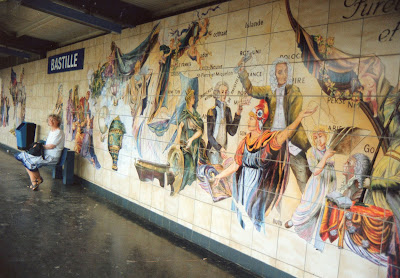
I am sitting here against the mural at Bastille Metro Station
 resting my weary legs after sightseeing. 

The Bastille Metro  Station pays homage to French history, notably events of 1789. In the centre of this picture is patriot Marianne, wearing the Revolutionary tricolour cockade in her cap. The origins of Marianne  are obscure, but she became a prominent national symbol in France, a personification of the new Republic, with its principles of Liberty and  Reason.  Statues of Marianne appear across France at civic buildings  and law courts and her image features on French euro notes and postage stamps.


U-Bahn.svgMUNICH -  The U-Bahn in the ciy opened in 1971, ahead of   the Olympic Games being  held in the city.  The network has expanded rapidly since then, with currently eight lines. 

Within, Company, Horizontal, Modern


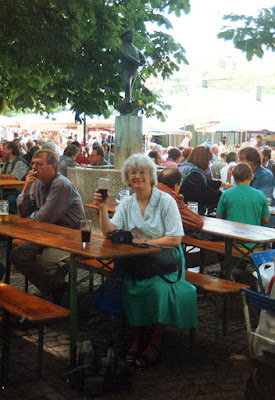
Enjoying a drink in a Munich beer garden 

BOSTON  - The Subway, known locally as “The T”, short for Massachusetts Bay Transportation Authority. began operating in 1897,making it the oldest system in the USA - and users would say you can tell, as many regard it as  noisy, shabby and rickety. It has five lines - Red, Green,  Blue, Orange and Silver - unimaginative names, perhaps, but easily  identifiable.

Massachusetts State House in Boston. 


 Harvard Square, Cambridge, Mass. 
with the subway station in the centre of the photograph  -1965.


NEW YORK  Subway opened in 1904 and soon became America's largest system. 


Subway Subway Station New York Manhattan M


 Broadway, 1965, with the photogperah showing signs of its age.

WASHINGTON D.C. - The Subway, know as the Metro is  the newest of the systems featured here, opening  in 1976.  The award winning designs reflect the style of late 20th  century architecture.   The network has grown to include six lines, 91 stations, and 118 miles (190 km) of route. 

Perhaps the station name attracting the most attention of tourists (like myself) was the quaintly named Foggy Bottom.  It took me a long time to discover what the initials GWU stood for on its full name   - obvious when you do find out - it is the station for the nearby George Washington University in the Georgetown area of Washington. 


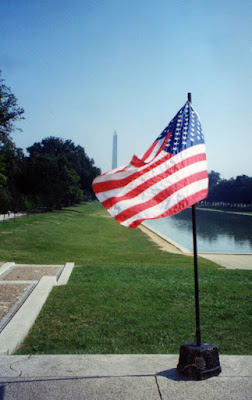
Looking towards the Washington Monument from the Lincoln Monument

Glasgow Subway.svgGLASGOW  - The Subway opened in 1896 making it one of the oldest  systems in the world. .  Other claims to fame - it is the only system that runs fully underground, and the only such one  in the UK  outside London.  It runs on a circular route with an outer and an inner circle.  Colloquially, it is sometimes referred to as the Clockwork Orange.  


 Glasgow City Chambers, Glasgow, City
 George Square, Glasgow with the imposing City Chambers in the background.


***************

Sepia Saturday give bloggers an opportunity 
to share their family history through photographs.
Travel to HERE to see what has inspired other Sepia Saturday bloggers.